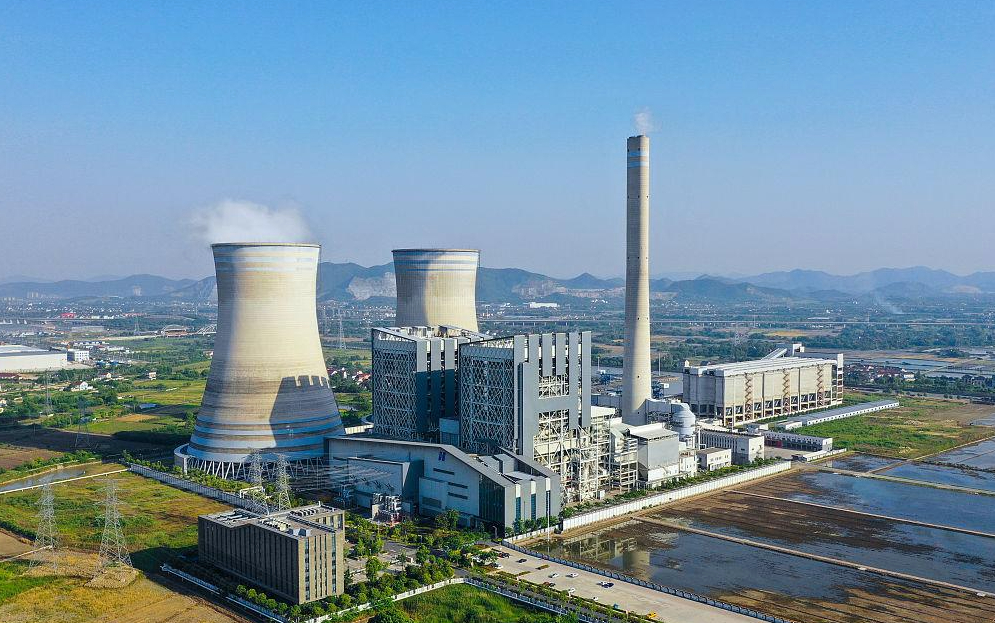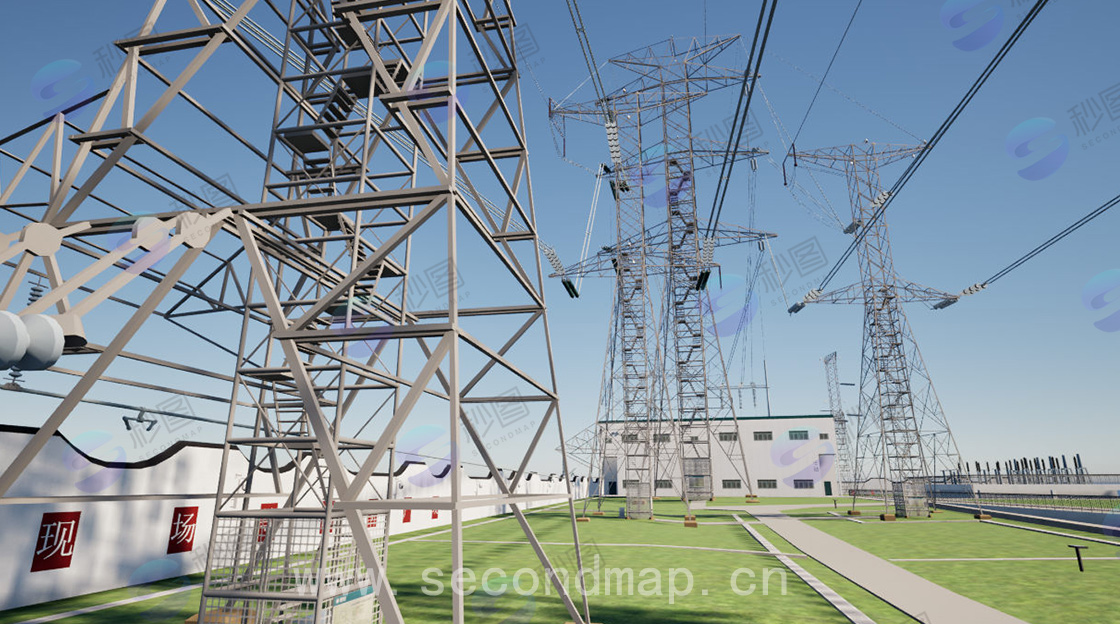
Providing high-precision 3D modeling services covering the entire "generation, transmission, distribution, storage" process, constructing complete digital twin power plants/stations, offering strong support for intelligent operation, maintenance and decision-making in the power and new energy industry
Focusing on power and new energy industry characteristics, providing professional, precise, and efficient 3D modeling solutions
Covers generation, transmission, distribution, and energy storage facilities, constructing a complete 3D model system for power energy
Meeting professional requirements of the power industry, model precision can reach millimeter level, ensuring equipment details and spatial relationships are accurate
Deep understanding of power equipment characteristics and system relationships, model structure complies with industry standards and professional cognition
Supports integration with various professional systems in the power industry, achieving data interoperability and visual linkage
Covering key facilities of the entire "generation, transmission, distribution, storage" process, constructing complete, high-precision 3D virtual power plants/stations
Covers core equipment and facilities of various power generation forms, accurately restoring their structural characteristics and spatial relationships, providing precise 3D foundation for power generation efficiency analysis and equipment management.
Boilers, steam turbines, cooling towers, reactors and other core equipment
Dams, hydraulic turbines, powerhouses, spillways and other key structures
Photovoltaic arrays, inverters, wind turbines (tower, nacelle, blades) and other equipment
Precisely constructing 3D models of substations, transmission lines and other key transmission and distribution facilities, completely presenting the topological structure and equipment details of power transmission networks.
Transformers, circuit breakers, disconnectors, GIS equipment, reactors, etc.
Towers, conductors, insulator strings, hardware, cables and other facilities
Distribution transformers, switchgear, ring main units and other distribution equipment
Constructing high-precision models of various energy storage facilities, supporting visual management and efficiency analysis of energy storage systems.
Constructing complete models of plant environment and auxiliary facilities, creating comprehensive 3D virtual scenes.
Adopting a combination of multiple advanced modeling technologies, selecting the most suitable modeling method according to different equipment characteristics
For core, standard equipment (such as transformers, wind turbines), using professional software for high-precision modeling to ensure accurate structure and rich details.
High-precision restoration of equipment details
Precise control of model structure and proportion
Support for custom detail performance
For existing or complex-shaped facilities, acquiring point cloud data through laser scanning or UAV oblique photography to reverse generate real 3D models.
True restoration of existing facility conditions
Precise modeling of complex structures
Rapid acquisition of current 3D data
For a large number of repetitive, regular objects, batch generation through scripting or using specific tools to improve efficiency and ensure standardization.
Greatly improving modeling efficiency
Ensuring consistency of batch models
Support for rapid parameter adjustment
Models must meet high standards of digital twin systems to ensure high-quality visual effects and application value
Geometric dimensions, spatial positions, and topological relationships must be consistent with the entities, texture materials need to be realistically restored, ensuring the model can truly reflect the appearance characteristics and spatial distribution of equipment.
On the premise of ensuring visual effects, optimize models through techniques such as polygon reduction, LOD (Level of Detail), texture compression, etc., ensuring smooth operation in large scenes and meeting real-time interaction requirements.
Models must be strictly logically layered by system and equipment (such as "plant area-subsystem-equipment-component"), and key models should be assigned metadata such as ID and name to facilitate data association and retrieval.
Model formats, naming rules, and coding systems should be unified, following relevant standards in the power industry, facilitating model integration, management and reuse, and ensuring system scalability.
In digital twin systems, 3D models serve as visualization carriers and can be connected and integrated with multiple subsystems to achieve data-driven visual management
Connecting with SCADA/DCS systems, real-time mapping of equipment status and operating parameters on the model, realizing visual monitoring and alarm location.
Linking with MIS/EAM systems, integrating equipment ledger, maintenance records, inspection plans and other information to realize full life cycle management of assets.
Binding camera models with real-time video streams, realizing visual field management and quick calling, enhancing on-site monitoring capabilities.
Planning 3D inspection paths for robots/UAVs, and real-time feedback of their positions and status, optimizing inspection efficiency.
Simulating fault impact range, emergency evacuation paths, providing 3D sand table for emergency plans, enhancing emergency response capabilities.
Accessing real-time wind speed, solar radiation and other data to drive simulation of operating status of wind turbines and photovoltaic panels for power generation efficiency analysis.
Whether you need to understand the details of 3D modeling technology or want to get a project quote, our professional team will provide you with one-on-one consultation services.
Room 1-1501, Jinhua Garden, No. 385 Jiaotong Avenue, Danyang Street, Xiaonan District, Xiaogan City, Hubei Province, China
(+86)13004585899
service@secondmap.cn
Scan with WeChat