Utility Tunnel Solution

Tunnel 3D Modeling

Build a complete digital twin of utility tunnels, achieve comprehensive digitization of underground space structures, pipelines, and operation facilities, provide precise 3D spatial base for smart tunnel operation management, enhance tunnel management efficiency and safety assurance capabilities

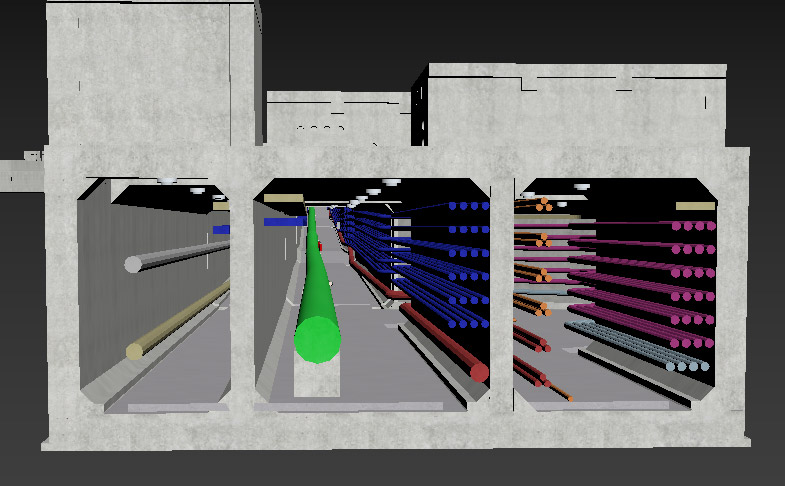
Utility Tunnel 3D Modeling Demonstration

Utility Tunnel 3D Modeling Service Advantages

Designed specifically for underground utility tunnel characteristics, providing high-precision, full-element, lightweight 3D modeling solutions

Full Element Modeling

Complete coverage of tunnel structures, various pipelines, auxiliary equipment and security facilities, building a comprehensive digital twin

Semantic Attributes

Models come with complete attribute information and unique identifiers, supporting seamless integration with IoT data and asset information

Deep Lightweight Processing

Professional optimization to ensure smooth loading and interaction of complex tunnel models on the Web, meeting real-time operation needs

Multi-system Integration

Supports docking with environment monitoring, security, pipeline monitoring and other systems to achieve integrated visual management

3D Modeling Main Objects

Tunnel modeling objects need to cover underground space structures, all pipelines, and key operation facilities to build a complete digital twin

Civil Structure

Tunnel Main Structure

Precisely restore the main tunnel structure and various auxiliary facilities, ensuring spatial dimensions match reality, providing accurate foundation for subsequent analysis and simulation.

Structure and dimensions of the main tunnel and branch tunnels

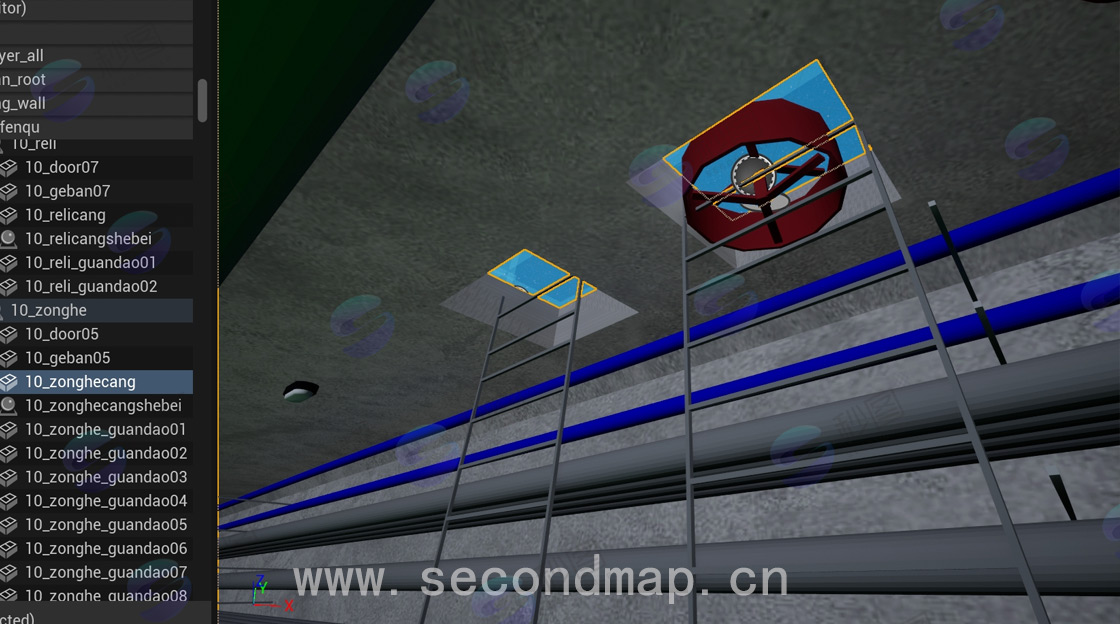
Functional openings such as material inlets, ventilation ports, and escape exits

Fire compartments, firewalls and isolation facilities

Lifting ports and internal stairs, platforms and other structures

Utility Tunnel Civil Structure Modeling
Tunneled Pipeline Modeling
Tunneled Pipelines

Various Professional Pipeline Systems

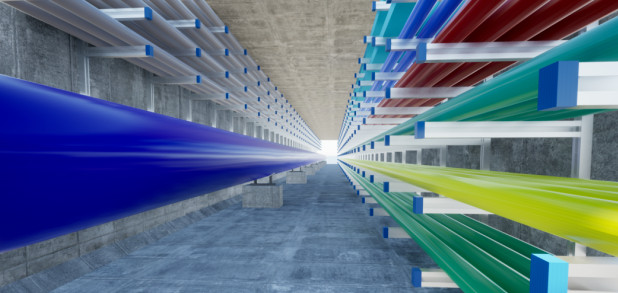
Precisely model various pipelines according to actual specifications, colors and positions, completely presenting the internal pipeline arrangement and connection relationships of the tunnel, supporting pipeline attribute query and analysis.

Power cables (including cable trays, supports and auxiliary facilities)

Water supply/reclaimed water pipelines and valve accessories

Heating pipelines and insulation layer structures

Gas pipelines and safety facilities

Communication cables and cable tray systems

Auxiliary Equipment System

Tunnel Internal Equipment and Facilities

Environment Monitoring Equipment

Temperature and humidity sensors, methane/O₂ sensors and other environmental sensing equipment

Fire Protection System

Fire extinguishers, temperature-sensitive optical fibers, fire hydrants and other fire protection facilities

Ventilation and Drainage System

Fans, water pumps, sump pits and other equipment

Monitoring and Identification System

Lighting equipment, cameras, patrol checkpoints and various signs

Inspection and Security Facilities

Safety and Operation Support Facilities

Inspection Robot System

Tracks, charging stations and robot operation path planning

Access Control System

Entrance access control, permission control points and safety isolation devices

Electronic Manhole Cover System

Smart manhole covers, status monitoring and remote control devices

Personnel Positioning System

Positioning base stations, beacons and personnel safety management equipment

3D Modeling Methods

According to tunnel characteristics, it is recommended to adopt a combination of multiple technologies for modeling to ensure model quality and application effects

Preferred Solution
BIM Model Lightweight Conversion

BIM Model Lightweight Conversion

Directly utilize BIM models from tunnel design and construction stages, perform lightweight processing and format conversion through professional engines, which can maximize the retention of structural relationships and semantic information, achieving seamless connection from construction to operation.

  • Retain complete engineering attributes
  • Accurate structural relationships
  • Construction and operation data connection
  • High efficiency, low cost
Scanning Reality Modeling

Scanning Reality Modeling

For tunnels that have been built but without BIM models, laser scanning technology is used to obtain high-precision point cloud data, reverse-generating reality 3D models consistent with the entities, with high precision and good restoration.

  • Millimeter-level precision
  • Real restoration of current situation
  • Suitable for built tunnels
  • Complete presentation of details
Manual Refined Modeling

Manual Refined Modeling

Conduct supplementary manual modeling for specific equipment and newly added facilities that cannot be covered by BIM and scanning, ensuring the completeness and accuracy of the model.

  • Supplement model completeness
  • Precise detail depiction
  • Meet special equipment needs
  • Unified and coordinated style

3D Modeling Requirements

Models need to meet the high requirements of tunnel operation for safety, accuracy and real-time performance

Accuracy and Correct Proportion

Models must be built strictly according to 1:1 scale, accurately reflecting the internal space, pipeline arrangement and equipment positions of the tunnel, which is the basis for spatial measurement, collision analysis and emergency simulation.

Deep Lightweight and Layered Management

Tunnel models are long and narrow with complex interiors, and must undergo efficient model face reduction, LOD (Level of Detail) processing and instantiation optimization to ensure smooth loading and rendering on the Web. Models need to be logically layered and managed according to "structure-profession-system".

Complete Structuring and Semanticization

Model objects must have clear classification and coding (such as classification by power, water supply, communication and other professions), and each equipment component must be given unique ID, model, parameters and other attributes, facilitating association with IoT data and asset information.

Support for Internal Space Analysis and Interaction

Models need to support seamless first-person roaming, pipeline transparency, equipment information query, area sectioning and other interactive operations to meet the needs of virtual inspection.

Connectable Subsystem Types

In the tunnel visual operation monitoring system, the 3D model serves as a unified spatial information base, which can be deeply integrated with multiple core subsystems

Environment and Equipment Monitoring System

Real-time binding and display of temperature and humidity, gas concentration, water level and other sensor data on the model, as well as the equipment status of fans and water pumps, to achieve visual early warning and linkage control of environmental risks.

Temperature and humidity monitoring Gas monitoring Equipment status Linkage control

Security and Video Monitoring System

Associate cameras, access control, intrusion alarms and other equipment with the model, achieve rapid linkage of "click model, retrieve video", and accurately locate alarm events in 3D space.

Video linkage Access control management Intrusion alarm Precise positioning

Pipeline Online Monitoring System

Bind various pipeline models with their operating parameters (such as power cable temperature, current carrying capacity; water supply pipeline pressure, flow rate) to achieve real-time visualization and over-limit early warning of pipeline operating status.

Cable monitoring Pressure monitoring Flow monitoring Over-limit early warning

Inspection and Operation Management System

Plan and display robot/manual inspection routes in the model, track inspection positions in real time, and directly mark and report hidden dangers found (such as pipe support displacement, leakage) in the 3D model.

Inspection routes Position tracking Hidden danger marking Work order management

Asset Management and Emergency Command System

Associate equipment ledger and maintenance records to achieve visual asset management. In case of emergencies (such as fire, leakage), quickly locate the accident point based on the model, view the surrounding environment, simulate disaster impacts, and efficiently dispatch emergency resources.

Asset ledger Maintenance records Accident location Emergency dispatch

Utility Tunnel Digital Twin Value

Through the above methods, the 3D model will completely change the "black box" state of utility tunnels, achieving transparent, intelligent management and safety assurance of underground lifelines, providing strong technical support for urban infrastructure operation.

Contact Us

Consult 3D modeling solutions
Get a customized quote

Whether you need to understand the details of 3D modeling technology or want to get a project quote, our professional team will provide you with one-on-one consultation services.

Company Address

Room 1-1501, Jinhua Garden, No. 385 Jiaotong Avenue, Danyang Street, Xiaonan District, Xiaogan City, Hubei Province, China

Contact Phone

(+86)13004585899

Contact Email

service@secondmap.cn

微信二维码

Scan with WeChat

Inquiry form