Full Lifecycle Digital Solution

BIM 3D Modeling

Based on professional BIM software, we create 3D models containing rich information parameters, widely applied in architecture, engineering, urban planning and other fields, outputting standard BIM models and GIS data results to meet monitoring and operation requirements throughout the project lifecycle

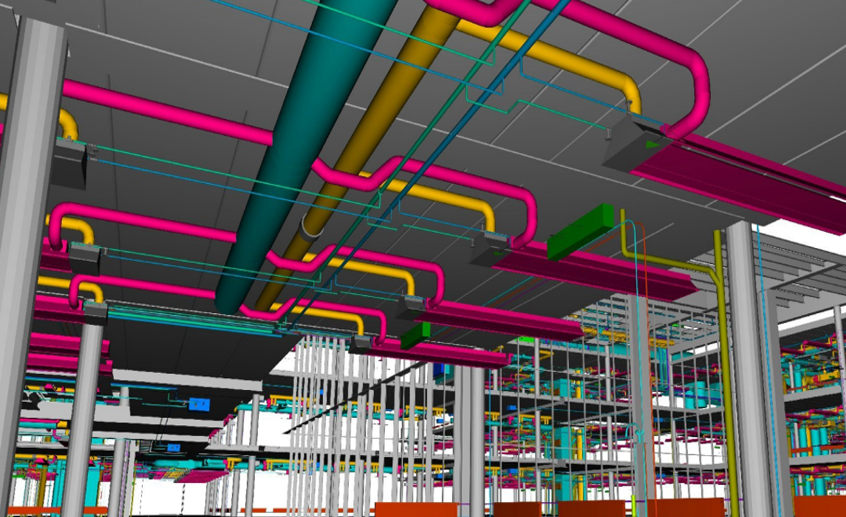
BIM 3D Modeling Effect
Full Discipline Model Integration | LOD300-500 Precision

Building Information Modeling (BIM) Full Lifecycle Application

Architectural Design
Engineering Construction
Urban Planning
Factory Construction
Real Estate Development
Facility Operations

BIM Modeling Core Advantages

Based on parametric modeling technology, we build 3D models containing rich information to provide data support for building lifecycle management

Information Model Integration

Models are tightly bound with attribute information, not only containing geometric shapes but also integrating rich parameters such as materials, performance, and costs, achieving the associative characteristic of "modify once, update everywhere".

  • Integration of Geometry and Attribute Information
  • Cross-discipline Data Association
  • Real-time Information Synchronization

Multi-Precision Standard Delivery

Following LOD100 to LOD500 precision standards, we provide models with corresponding precision based on project stage requirements, meeting full lifecycle applications from conceptual design to operation management.

  • Full LOD100-500 Precision Coverage
  • Stage-wise Precision Control
  • Meeting Multi-scenario Application Needs

Multi-system Integration Capability

Supporting open data formats such as IFC, seamlessly connecting with project management, smart construction sites, and facility management systems, becoming the digital foundation for building lifecycle management.

  • Standard Data Format Output
  • Multi-platform System Compatibility
  • Full Lifecycle Data Support

BIM 3D Modeling Objects

BIM modeling objects are collections of building components containing rich information parameters, far beyond geometric shapes

Building Structure and Enclosure

  • Structural components such as foundations, beams, slabs, and columns
  • Walls (distinguishing structural walls from partition walls)
  • Doors, windows, and curtain wall systems
  • Roofs and drainage systems

Building Spaces and Interior Finishes

  • Room and functional area divisions
  • Vertical transportation such as stairs, elevators, and escalators
  • Floor, wall, and ceiling finish surfaces
  • Built-in furniture and decorative components

Mechanical and Electrical Systems

  • HVAC ductwork and piping systems
  • Plumbing systems including domestic water, fire protection, and drainage pipes
  • Electrical cable trays, conduits, and cables
  • Equipment such as HVAC units, pumps, valves, and distribution panels

Other Professional Components

  • Fire protection equipment such as sprinklers and smoke detectors
  • Security systems such as cameras and access control
  • Electrical fixtures such as lighting fixtures, switches, and outlets
  • Specialized professional system components

BIM Modeling Technical Details

Professional modeling methods and precise accuracy control ensure models meet application requirements at all stages

BIM 3D Modeling Method

The core method of BIM modeling is parametric modeling. It uses professional BIM core modeling software, setting geometric parameters and non-geometric attributes of components, to drive the generation and modification of 3D models.

Core Modeling Software

Autodesk Revit ArchiCAD Bentley Systems Tekla Structures CATIA

Parametric Modeling Characteristics

Geometry Parameter Drive

Defining component shapes through geometric parameters such as length, width, height, and radius, with automatic model updates when parameters are modified

Non-geometric Attribute Association

Associating non-geometric information such as materials, models, fire ratings, and costs to achieve integrated information modeling

Information Association and Consistency

Achieving "modify once, update everywhere" to ensure consistency of model information across all disciplines and stages

BIM 3D Modeling Precision Requirements

LOD (Level of Development) defines the geometric precision and information depth of model components at different stages, meeting project lifecycle needs from conceptual design to operation management:

LOD 100
LOD 200
LOD 300
LOD 350
LOD 400
LOD 500

LOD 100 (Conceptual)

Approximate geometric shapes for schematic design and area analysis, without detailed attribute information

LOD 200 (Preliminary Design)

Generic components with approximate quantities, dimensions, and positions, suitable for system layout analysis and preliminary quantity estimation

LOD 300 (Detailed Design)

Precise dimensions, positions, and information for construction drawing design, clash detection, and detailed quantity calculation - the delivery standard for construction drawing stage

LOD 350 (Construction and Prefabrication)

Includes interface details with other components (such as supports and hangers), supporting component prefabrication and construction coordination

LOD 400 (Manufacturing and Installation)

Manufacturing-level precision with detailed manufacturing and assembly information, supporting factory prefabrication and precise on-site installation

LOD 500 (As-Built and Operations)

As-built model containing actual installed component information and all attributes required for operations, used for asset management and facility management

BIM 3D Modeling Requirements

Model and Information Integration

The core requirement is that models must be tightly bound with attribute information (such as model, manufacturer, maintenance contact), achieving unified management of geometric data and non-geometric data.

Lightweight and Visualization

Original BIM models require professional lightweight processing, retaining structure and information while meeting smooth rendering and interaction on the Web, supporting multi-user collaborative browsing.

Standardization and Collaboration

Following unified modeling standards, naming conventions, and workflows to ensure seamless integration and collaborative work of multi-discipline models including architecture, structure, and MEP.

IFC Standard Delivery

Models should support open data formats such as IFC to ensure data interoperability across different platforms and systems, meeting long-term data preservation and sharing needs.

Data Results Output

Revit Native Files
IFC Standard Format
3DTiles Tiles
GIS Spatial Data
Lightweight Models
Attribute Database

Integrable Subsystem Types

In building visualization systems, BIM models serve as the authoritative "digital foundation" that can be deeply integrated with the following subsystems:

Project Collaboration Management Platform

During design and construction phases, integrate with collaboration platforms to manage model versions, issue reports, and approval processes, improving team collaboration efficiency.

Smart Construction Site System

Integrate schedule (4D) and cost (5D) data to achieve construction progress simulation and resource management, enhancing construction process control capabilities.

Facility and Equipment Management System

Integrate with EAM/CMMS systems during the operation phase to achieve visual linkage between equipment inventory, inspection plans, maintenance history, and BIM models, improving operational efficiency.

Building Automation and Energy Management System

Bind equipment in BIM with real-time operational data (BA system) and energy consumption data (EMS), achieving equipment monitoring and energy efficiency analysis to optimize energy consumption.

Asset and Space Management System

Perform space leasing management, workstation management, and asset positioning based on BIM models to improve space utilization efficiency and asset management levels.

BIM Value Extension

Through deep integration with various systems, BIM models evolve from design tools to core data carriers throughout the building lifecycle, providing a solid foundation for refined and intelligent building management.

Contact Us

Consult 3D modeling solutions
Get a customized quote

Whether you need to understand the details of 3D modeling technology or want to get a project quote, our professional team will provide you with one-on-one consultation services.

Company Address

Room 1-1501, Jinhua Garden, No. 385 Jiaotong Avenue, Danyang Street, Xiaonan District, Xiaogan City, Hubei Province, China

Contact Phone

(+86)13004585899

Contact Email

service@secondmap.cn

微信二维码

Scan with WeChat

Inquiry form