Digital Twin Solution

Campus 3D Modeling

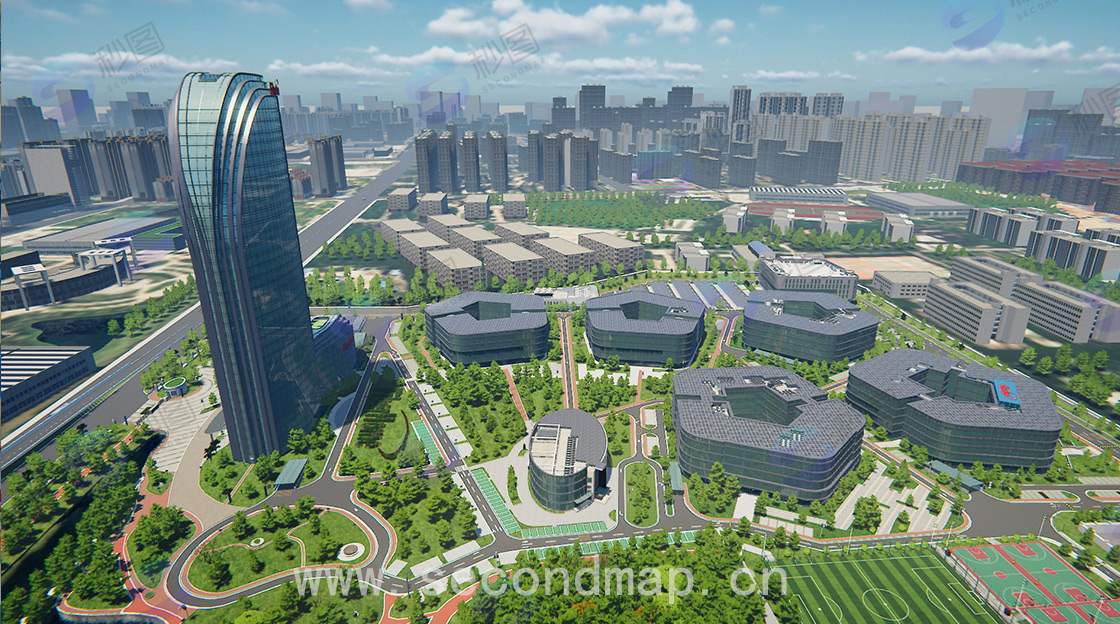
Build a full-element campus digital twin covering geographic space, building facilities and dynamic elements, achieving campus visual management, intelligent operation and efficient decision-making, empowering smart campus construction

Campus 3D Modeling Display

Campus 3D Modeling Service Advantages

Multi-technology integration, building high-precision, full-element, interactive campus digital twins to assist smart management

Full-Element Modeling

Covering geographic landscapes, building clusters, infrastructure networks and dynamic elements to build a complete campus digital twin

Multi-Technology Integration

Combining oblique photography, BIM conversion, manual modeling and procedural generation to balance efficiency and accuracy requirements

System Integration

Seamless integration with security, equipment management, energy management and other systems to achieve data visualization and linkage control

High-Performance Experience

Deep lightweight processing to ensure smooth loading and interaction on various terminals, supporting efficient rendering of large-scale scenarios

3D Modeling Objects

Campus 3D modeling needs to build a full-element digital twin covering geographic space, building facilities and dynamic elements

Geography and Landscape

Geographic and Landscape Elements

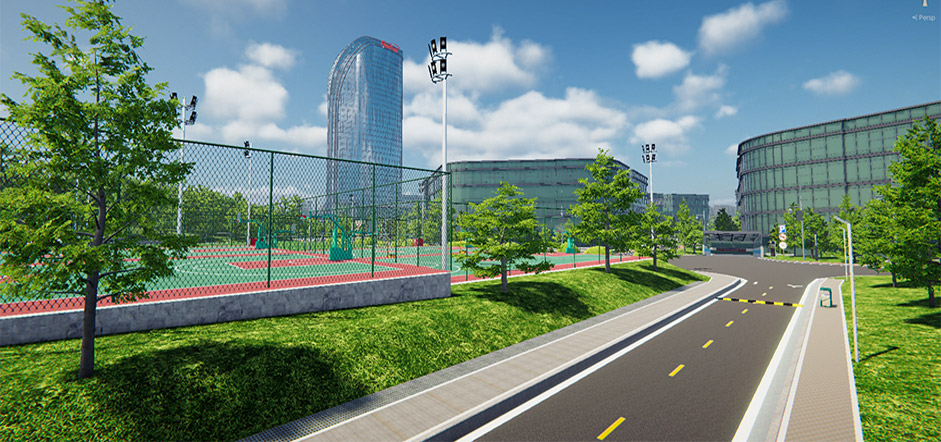
Build the basic geographic spatial framework of the campus, accurately reproducing natural and artificial landscape elements to provide a spatial reference for the entire campus model.

Campus boundaries and topography

Internal roads and traffic markings

Green vegetation and landscape trees

Plazas and activity areas

Water features and fountains

Public art pieces and sculptures

Campus Geography and Landscape Modeling
Campus Building Clusters Modeling
Building Clusters

Building Cluster Elements

Accurately reproduce all functional buildings within the campus and their key internal spaces, achieving complete digitization from building appearance to internal structure.

Office buildings and R&D buildings

Production workshops and warehouses

Dormitories and canteens and other living facilities

Medical and educational supporting buildings

Building internal halls and corridors

Key functional spaces (classrooms, wards, etc.)

Infrastructure Network

Infrastructure Network

Build 3D models of key campus infrastructure, including underground pipelines, utility tunnels, transportation and security facilities.

  • Utility tunnels and underground pipelines
  • Smart parking lots and charging stations
  • Traffic lights and street lamps
  • Walls and access control systems
Key Equipment and Subsystems

Key Equipment and Subsystems

Fine modeling of important campus equipment and functional subsystems to provide a digital foundation for equipment management and operation.

  • Power distribution stations and equipment rooms
  • Fire protection and security facilities
  • 5G base stations and communication equipment
  • Environmental protection and water treatment facilities
Dynamic and Signage Elements

Dynamic and Signage Elements

Build digital models of dynamic objects and signage systems within the campus to enhance the authenticity and practicality of the scene.

  • Vehicles and personnel indications
  • Surveillance cameras and signage
  • Logistics loading platforms
  • Campus-specific functional facilities

3D Modeling Methods

For the characteristics of wide campus range, multiple elements, and diverse accuracy requirements, a multi-technology integrated modeling strategy is adopted

Oblique Photography Realistic Modeling

Rapidly generate high-fidelity models of campus macro geographic environment and building exteriors through drone aerial photography, with extremely high efficiency, suitable for overall situational display and spatial planning.

High Efficiency High Fidelity Large Coverage

BIM Model Lightweight Conversion

For new or core buildings, directly utilize their BIM design models, integrate after lightweight processing, retain complete building internal structure, pipelines and equipment information, and achieve deep operation.

Complete Information Operable High Precision

Manual Precision Modeling

Supplemental manual modeling for indoor key areas, core equipment and facilities requiring high interactivity that cannot be well represented by oblique photography.

Precise Details High Interactivity Key Focus

Procedural Generation

Procedurally batch arrange regular and repetitive elements to greatly improve the construction efficiency and standardization of large-scale scenarios.

High Efficiency Strong Standardization Batch Processing

3D Modeling Requirements

To ensure the practicality, efficiency and scalability of the system, the model must meet the following core requirements

Multi-Precision Integration and Proportion Coordination

Macro oblique photography models, meso building models and micro equipment models need to be seamlessly integrated with correct proportions and precise spatial positions to form a multi-level, integrated visualization capability from "campus to equipment".

Deep Lightweight and High-Performance Rendering

Campus scenario data volume is huge, strict hierarchical partitioning, LOD (multi-detail level) processing, instancing optimization and texture compression must be performed to ensure smooth loading and interaction on Web and mobile terminals.

Unified Structured and Semantic Organization

All model objects must be logically organized and coded according to unified specifications (such as "campus-functional area-building-floor-room-equipment"), and key facilities must be assigned attributes such as ID, name, and model number to lay the foundation for association with IoT data and business systems.

Standardized Data Format and Interface

Model formats should be compatible with mainstream Web3D rendering engines (such as Three.js, Cesium), and provide standard data interfaces for rapid integration with various heterogeneous business systems.

Integrable Subsystem Types

In the campus visual operation and monitoring system, the 3D model serves as a unified digital base and can be deeply integrated with the following core subsystems

Security Integration and Emergency Command System

Integrate video surveillance, access control, perimeter intrusion, fire alarm and other systems on the model to achieve precise positioning of alarm events in 3D space, visual linkage and one-click emergency resource dispatch.

Video Surveillance Fire Alarm Emergency Dispatch

Equipment and Facility Management System

Associate elevator, air conditioning, power distribution, water supply and drainage equipment models with real-time operating data and maintenance work orders to achieve visual monitoring and full lifecycle management of facilities.

Real-time Monitoring Maintenance Management Lifecycle

Energy Management System

Visually display the real-time flow, consumption and energy efficiency data of electricity, water, gas and other energy sources in a 3D scene, locate high-energy-consuming units, and assist in energy-saving decisions and carbon management.

Energy Consumption Monitoring Energy Saving Analysis Carbon Management

Smart Transportation and Logistics System

Real-time display of campus vehicle flow, parking space status, vehicle trajectories, and linkage with parking guidance and gate systems. In logistics parks, cargo loading/unloading, storage and AGV operation status can be further visualized.

Traffic Monitoring Smart Parking Logistics Visualization

Environment and Space Management System

Bind air quality, temperature and humidity sensor data with model positions to achieve visual environmental quality. At the same time, meeting rooms, workstations, parking lots and other space resources can be visually reserved and status managed.

Environmental Monitoring Space Reservation Resource Management

Integrated Digital Twin Foundation

Through multi-system integration, the 3D model will become an integrated, perceptible, and interactive campus digital twin foundation, comprehensively improving the comprehensive operational efficiency, safety management level and service quality of cross-functional campuses.

Comprehensive Operations Safety Management Service Improvement

Contact Us

Consult 3D modeling solutions
Get a customized quote

Whether you need to understand the details of 3D modeling technology or want to get a project quote, our professional team will provide you with one-on-one consultation services.

Company Address

Room 1-1501, Jinhua Garden, No. 385 Jiaotong Avenue, Danyang Street, Xiaonan District, Xiaogan City, Hubei Province, China

Contact Phone

(+86)13004585899

Contact Email

service@secondmap.cn

微信二维码

Scan with WeChat

Inquiry form