Industrial Digital Solution

Workshop 3D Modeling

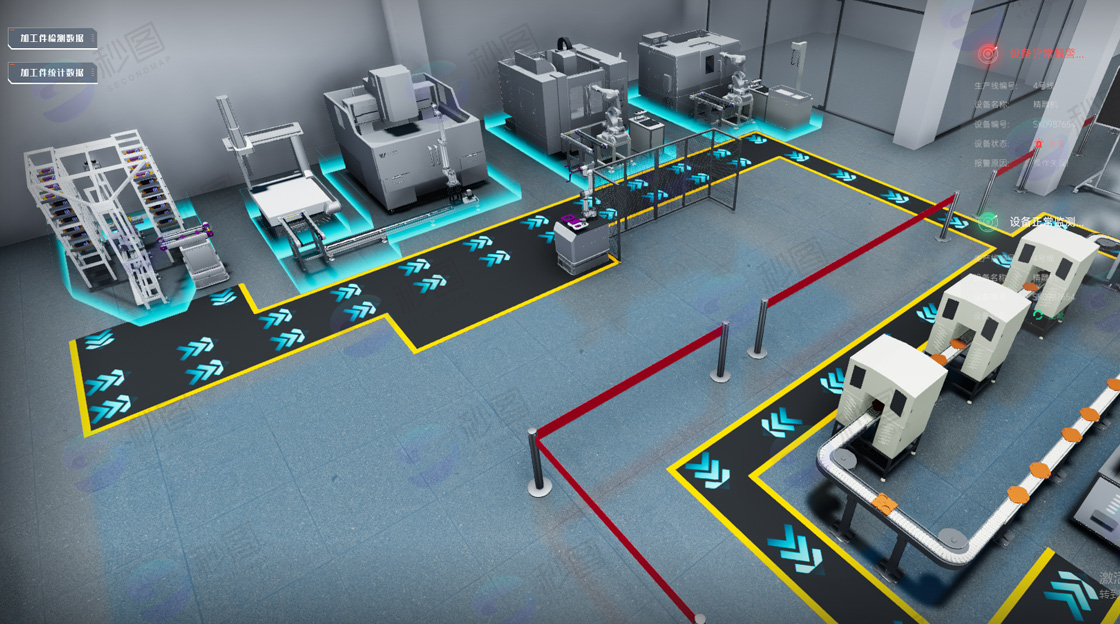
Build a complete digital twin of the workshop, enabling 3D visualization of production space, equipment assets, logistics systems and business processes, providing powerful digital support for smart manufacturing, lean production and efficient operation and maintenance

Workshop 3D Modeling Display

Workshop 3D Modeling Service Advantages

Create high-precision, interactive, and integrable workshop digital twins to empower smart manufacturing transformation and upgrading

Comprehensive Element Digitalization

From building structures to equipment details, from logistics systems to pipeline networks, comprehensively covering all key elements of the workshop

Multi-System Integration

Deep integration with industrial systems such as MES, SCADA, WMS to achieve data visualization and business linkage

High Performance Experience

Professional lightweight processing to ensure smooth rendering and real-time interactive response in large-scale complex scenarios

Industrial-Grade Precision

Strictly ensuring dimensional proportions and spatial relationship accuracy to meet professional needs such as production simulation and spatial analysis

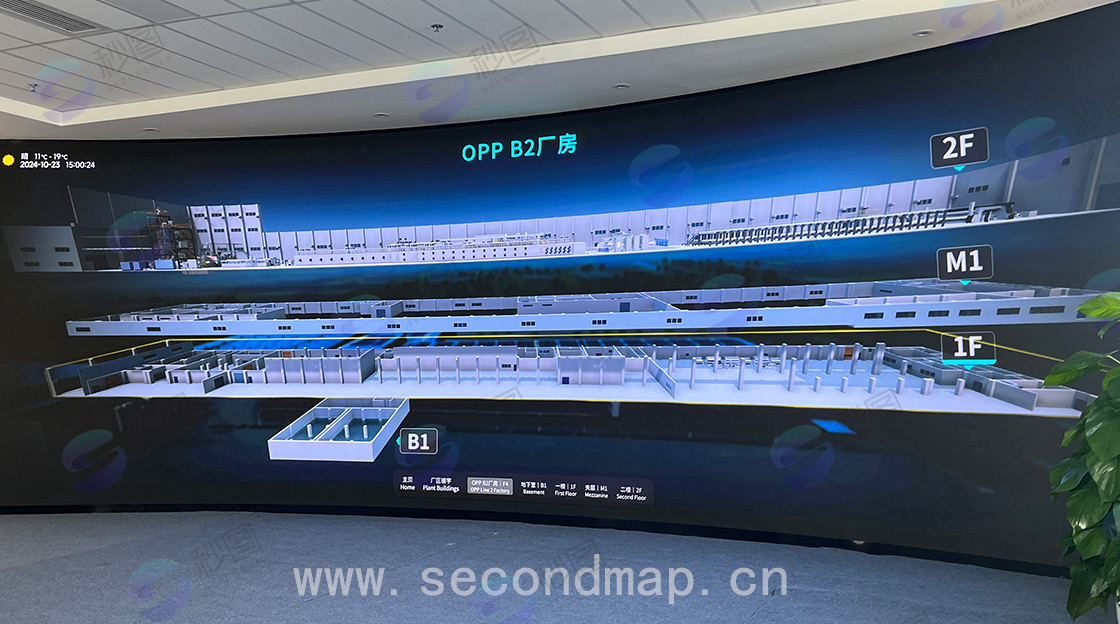
3D Modeling Objects

Workshop modeling aims to build a digital twin that integrates space, equipment, materials and processes

Workshop Buildings and Structures

  • Workshop main structure, walls and floors
  • Support structures such as columns, beams, crane beams
  • Production passages, safety passages, logistics passages
  • Entrances and exits, elevators, stairs and other transportation facilities
  • Partitions, guardrails, operating platforms, etc.

Production Equipment and Lines

  • Various machine tools, machining centers, special equipment
  • Industrial robots, robotic arms and work cells
  • Assembly lines, inspection lines, test benches
  • Conveyors, assembly lines and material transfer equipment
  • Buffer areas, workstations, operating desks

Logistics and Warehousing Facilities

  • AGV cars and navigation paths, charging stations
  • Stereo shelves, material racks, storage cabinets
  • Material baskets, pallets, bins
  • Loading and unloading platforms, material temporary storage areas
  • Forklifts, cranes and other logistics equipment

Utility Engineering and Key Elements

  • Power trays, cables, distribution boxes
  • Compressed air, coolant, hydraulic pipelines
  • Ventilation, dust removal, air conditioning systems
  • Production kanban, indicator lights, displays
  • Safety signs, fire facilities, emergency equipment

3D Modeling Methods

According to data foundation and application needs, adopting diversified fusion modeling strategies

BIM and CAD Model Conversion

BIM and CAD Model Lightweight Conversion

For newly built workshops, priority is given to using BIM models or equipment CAD models from the design phase, which are processed through professional engines for lightweight conversion, retaining complete structural hierarchy and engineering attributes, and realizing data inheritance.

  • Retain original design data and attributes
  • Significantly reduce model data volume
  • Maintain model accuracy and details
Manual Fine Modeling

Manual Fine Modeling

High-precision modeling of customized production lines and complex equipment without original models, accurately restoring their appearance, structure and movement relationships (such as robot motion envelopes).

  • Accurately restore complex details
  • Support motion relationship definition
  • Meet customization needs
Scanning Reality Modeling

Scanning Reality Modeling

For existing workshops, using laser scanning or tilt photography technology to quickly generate high-fidelity real 3D models, suitable for digital archiving and layout optimization analysis.

  • Truly restore existing status
  • Fast modeling speed and high efficiency
  • Precision up to millimeter level
Parametric Modeling

Parametric and Modular Modeling

Parametric batch generation of standardized and repetitive elements (such as shelves, pipes, standard equipment) to improve efficiency and ensure standardization and unity.

  • Quickly generate models in batches
  • Ensure model standardization and unity
  • Support parameter adjustment and reuse

3D Modeling Requirements

To support refined operation and maintenance management, models need to meet the following core requirements

01

Accurate Spatial and Layout Relationships

Model dimensions, proportions, and the layout of all equipment and facilities must be strictly consistent with the physical workshop. This is the basis for spatial analysis and logistics simulation. Ensure precise mapping between the digital space and the physical space to support subsequent spatial analysis functions such as distance measurement and collision detection.

02

Deep Lightweight and High Performance

Workshop models usually contain a large number of equipment and must undergo professional model face reduction, LOD (multi-detail level) grading and texture compression to ensure real-time rendering and smooth interaction of large-scale scenes on the Web, meeting the needs of multiple people browsing and operating online simultaneously.

03

Complete Structuring and Semanticization

Models must be hierarchically organized according to the logical tree of "workshop-area-production line-equipment-component", and each key object must be assigned a unique ID and attributes to achieve precise association with real-time data and business data, laying the foundation for data visualization and intelligent analysis.

04

Support Animation and Interaction

Predefine animations for moving parts (such as equipment doors, robot joints, AGVs), and support interactive operations such as click query, perspective switching, transparency, and sectioning to improve user experience and meet viewing and analysis needs in different scenarios.

Workshop 3D Modeling Precision Requirements

Industrial-Grade Modeling Standards

Strictly follow industrial digital standards to ensure model quality meets the needs of production management and decision support

Integration System Types

In the workshop visualization operation and maintenance monitoring system, the 3D model serves as a unified digital baseboard and can be deeply integrated with the following core business subsystems

Manufacturing Execution System (MES)

Real-time mapping of production order progress, equipment processing status, and material consumption on the model to achieve visual monitoring and scheduling command of the entire production process.

Order Progress Production Status Scheduling Command

Supervisory Control and Data Acquisition System

Bind equipment on the model with real-time operating parameters (such as spindle speed, temperature, vibration), start-stop status and fault alarms to achieve transparent monitoring of equipment health status.

Real-time Parameters Equipment Status Fault Alarm

Warehouse Management System (WMS)

Link with shelves and AGV models to visually display material inventory status, location information and AGV's real-time position and task trajectory in real-time, optimizing warehouse management efficiency.

Inventory Status Location Information AGV Scheduling

Enterprise Asset Management System

Link equipment ledgers, inspection plans, maintenance history and spare parts inventory to achieve visual management of the entire asset lifecycle and predictive maintenance, reducing maintenance costs.

Equipment Ledger Maintenance History Predictive Maintenance

Personnel Positioning and Safety System

Real-time display of operator positions in the model to achieve electronic fences, SOP error prevention and safety warnings, ensuring personnel safety and standardized operating procedures.

Personnel Positioning Electronic Fence Safety Warning

Energy Management System (EMS)

Link pipelines for electricity, compressed air, etc., with metering instrument models to visually analyze workshop energy consumption data and flow, assisting energy conservation and cost control.

Energy Consumption Monitoring Energy Analysis Energy Conservation Optimization

Build Workshop Digital Twin, Empower Smart Manufacturing

Through 3D modeling, deeply integrate physical workshops with information space, providing core visual support for creating transparent, efficient, and safe digital workshops, helping enterprises improve production efficiency, reduce operating costs and innovate management models.

Contact Us

Consult 3D modeling solutions
Get a customized quote

Whether you need to understand the details of 3D modeling technology or want to get a project quote, our professional team will provide you with one-on-one consultation services.

Company Address

Room 1-1501, Jinhua Garden, No. 385 Jiaotong Avenue, Danyang Street, Xiaonan District, Xiaogan City, Hubei Province, China

Contact Phone

(+86)13004585899

Contact Email

service@secondmap.cn

微信二维码

Scan with WeChat

Inquiry form